Since 2002
Koenig Polish brings more than two decades of product history to the automotive finishing conversation.
Automotive finishes demonstrate the difference between visual cleanliness and a genuinely prepared surface. A washed panel may still hold bonded fallout, rail dust, mineral residue, road film, old product, and embedded contamination.
Koenig Polish brings more than two decades of product history to the automotive finishing conversation.
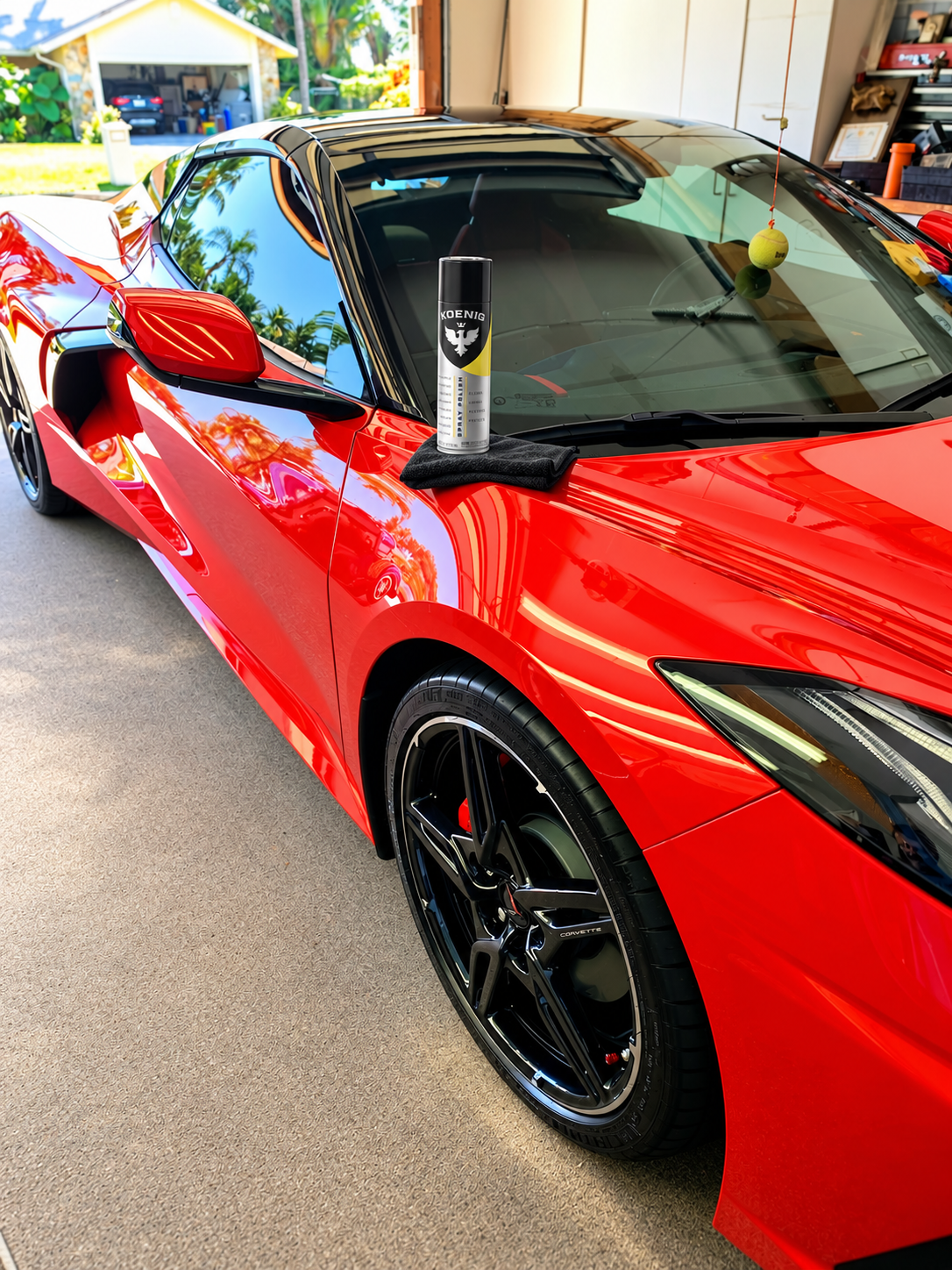
A show customer who already owned many other waxes tried Koenig on his Corvette and then followed through by sending the photo shown above. See the full customer story.
Surface Lab separates preparation, immediate appearance, water behavior, cleaning ease, and durability so each part of performance can be evaluated on its own.
Airborne particles can bond to the finish and remain after ordinary shampooing. Their presence can often be felt even when the panel looks clean.
Ferrous contamination can embed in the surface and later oxidize. It should be treated as bonded contamination rather than simple loose dirt.
Evaporated water can leave mineral deposits. Some are removable contamination; more severe exposure can leave alteration or etching that requires correction.
Traffic residue, oils, soot, and environmental grime can create a film that normal washing does not always remove completely.
Old waxes, dressings, residue, and incompatible layers can affect how a new product spreads, bonds, wipes, or appears.
Swirls, scratches, sanding marks, and clearcoat defects are correction problems, not simply contamination problems.
Preparation reduces uncertainty.
When loose dirt, bonded contamination, residue, and old product are controlled, the next treatment is being evaluated against the actual surface rather than an unknown mixture of whatever was already there.
That does not mean every vehicle needs aggressive correction before protection. It means the process should match the condition and the goal.
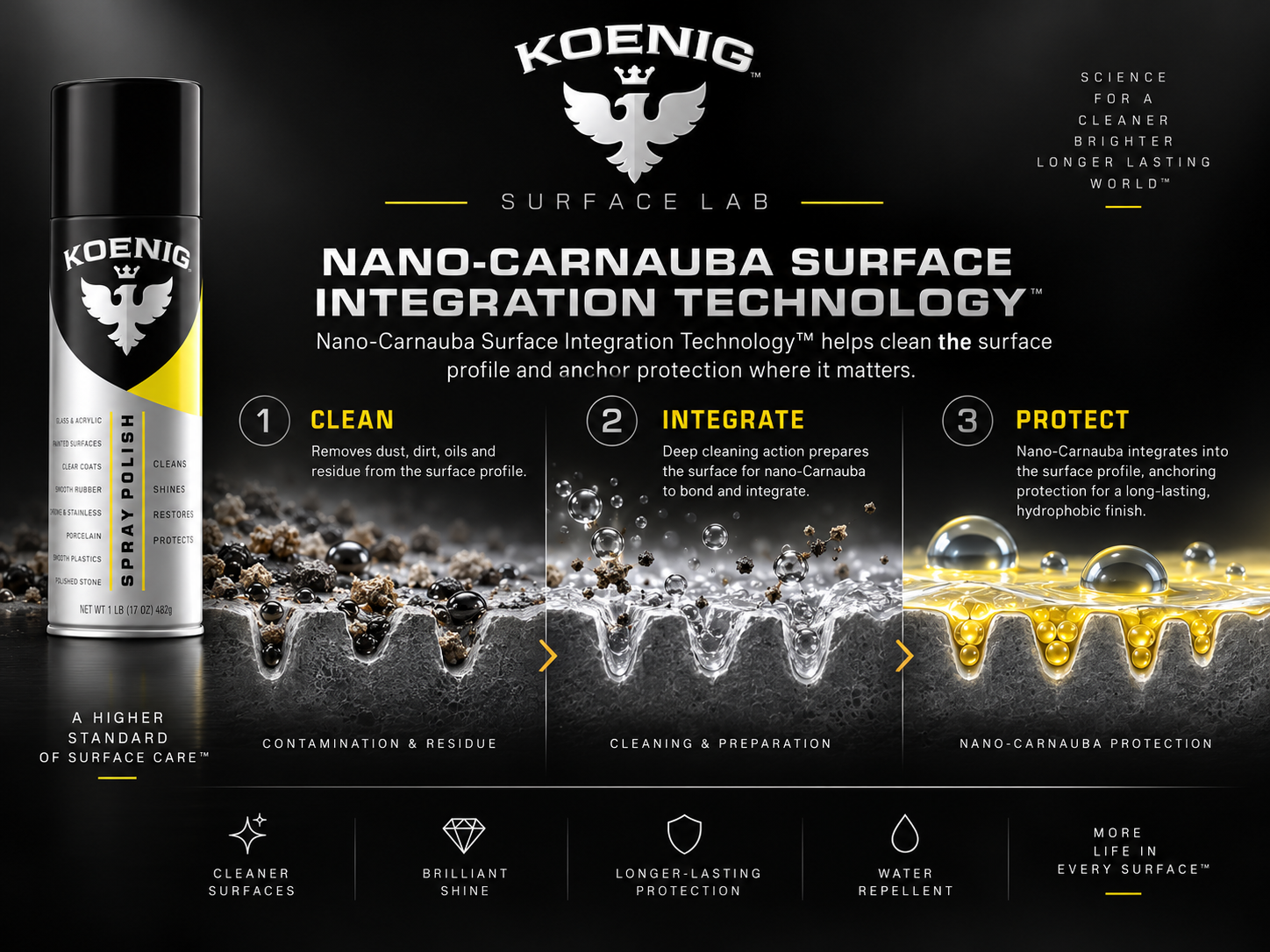
Preparation and product technology answer different questions.
A known starting surface makes it easier to judge how a finishing product spreads, buffs, looks, sheds water, cleans, and changes through normal maintenance.
Measure or document visible gloss under repeatable lighting rather than relying only on a fresh-product impression.
Surface feel can be useful as an observation, but it is subjective and should not replace durability measurements.
Track beading and roll-off over time to see how surface behavior changes after washing and exposure.
Observe how detergents and common maintenance chemistry affect the treatment under controlled conditions.
Evaluate whether ordinary contamination releases more easily after treatment.
Repeat the same observations after multiple maintenance cycles rather than stopping at the initial application.
See automotive polish and paint protection Read the decontamination-before-protection guide → See automotive water spots and mineral deposits See rail dust and bonded contamination See automotive glass haze and road film Why preparation changes film formation → How Koenig describes Nano-Carnauba Surface Integration →