
Ordinary haze can come from oily traffic film, washer residue, or environmental grime, while water spots or optical defects may require a different path.
Automotive glass | Koenig Polish since 2002
Windshield still hazy after normal cleaning? Separate road film from mineral deposits and damaged glass.
Traffic film, oily contamination, washer residue, and environmental grime can leave standard automotive glass hazy or difficult to wipe clean. Confirm the substrate and any coating first, remove loose grit, then work conservatively so ordinary film removal is not confused with mineral-deposit correction or glass damage.
Quick answer
Confirm the glass and coating before polishing.
Do not assume an abrasive shower-glass method transfers to windshields, coated glass, tint edges, or specialty treatments.
Confirm compatibility, remove loose grit, test a small section, work wet with controlled pressure, and reassess after buffing.
Diagnose before you treat
Haze, mineral deposits, and glass damage are different conditions.
Oily traffic residue, washer-fluid residue, and environmental grime can create a smeared or hazy appearance even after routine glass cleaning. Water spots that survive normal cleaning may instead be bonded mineral residue.
If contamination is gone but the visual defect remains, the glass, coating, tint, or surrounding surface may need a different correction path. Do not simply increase abrasion because the mark is still visible.
Recommended procedure
For compatible standard automotive glass with road film or oily haze.
Use a small controlled test area so film removal is not confused with mineral-deposit correction or glass damage.
Confirm the glass and coating
Identify standard automotive glass and check for aftermarket coatings, films, tint edges, specialty treatments, or manufacturer restrictions before using any polishing process.
Remove loose grit first
Wash away sand, dust, and other loose particles so they cannot become abrasives while the windshield or side glass is being worked.
Test a small section
Apply a light amount of Koenig to a compatible test area and work it with a clean soft towel using controlled pressure. Keep the product wet while working instead of dry-scrubbing the glass.
Buff clear and reassess
Buff with a separate clean microfiber towel. If oily haze or road film clears but spots or optical marks remain, diagnose those separately rather than simply increasing abrasion.
Proof and real-world application
Judge clarity after a controlled test area.
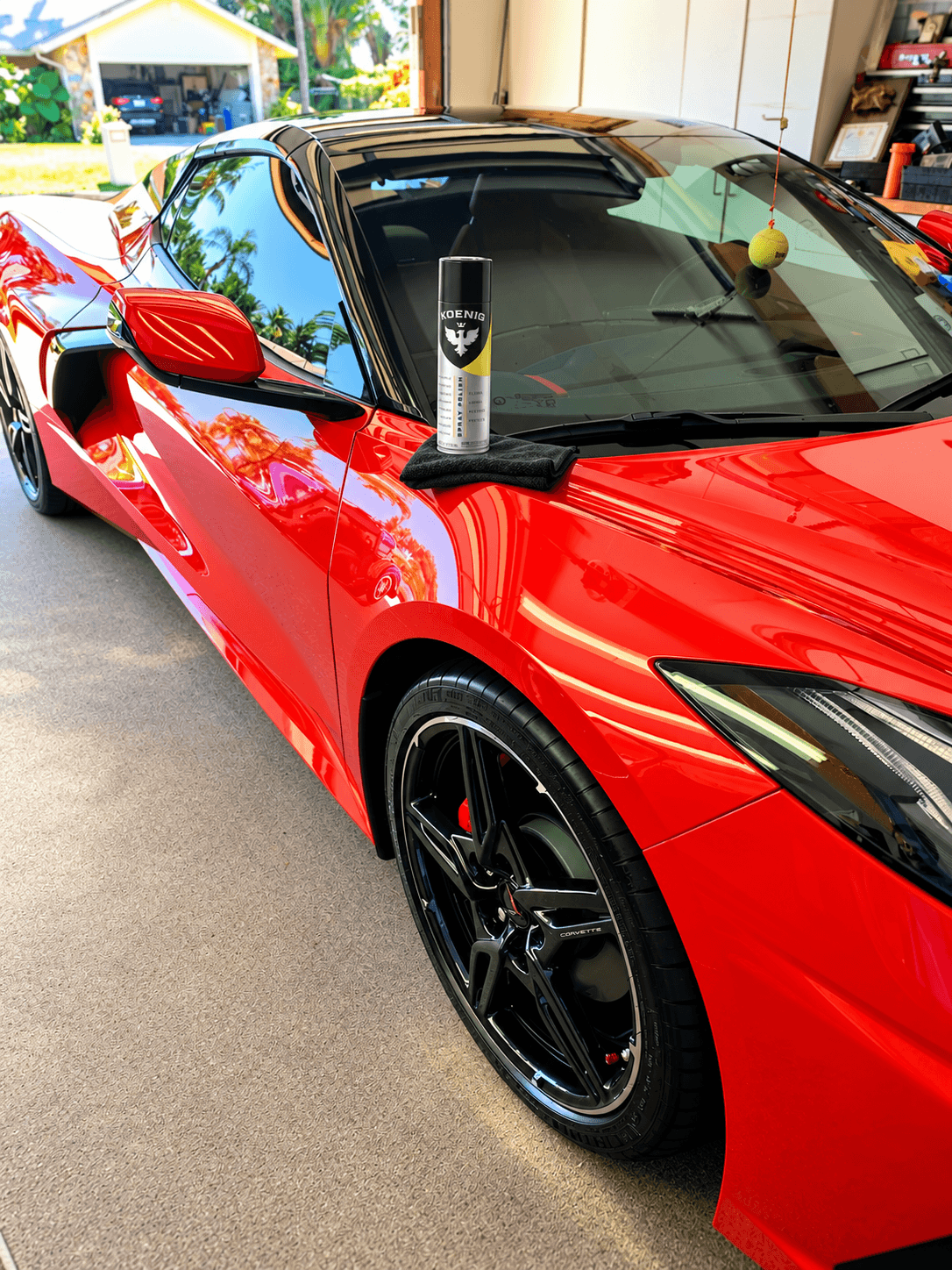
A vehicle-use example does not prove that every windshield, coating, tint edge, or glass treatment is compatible. The meaningful test is the small area in front of you: whether road film clears without abnormal optical change, coating damage, or other adverse response.
Why it works
Evaluate the clean glass separately from the protection effect.
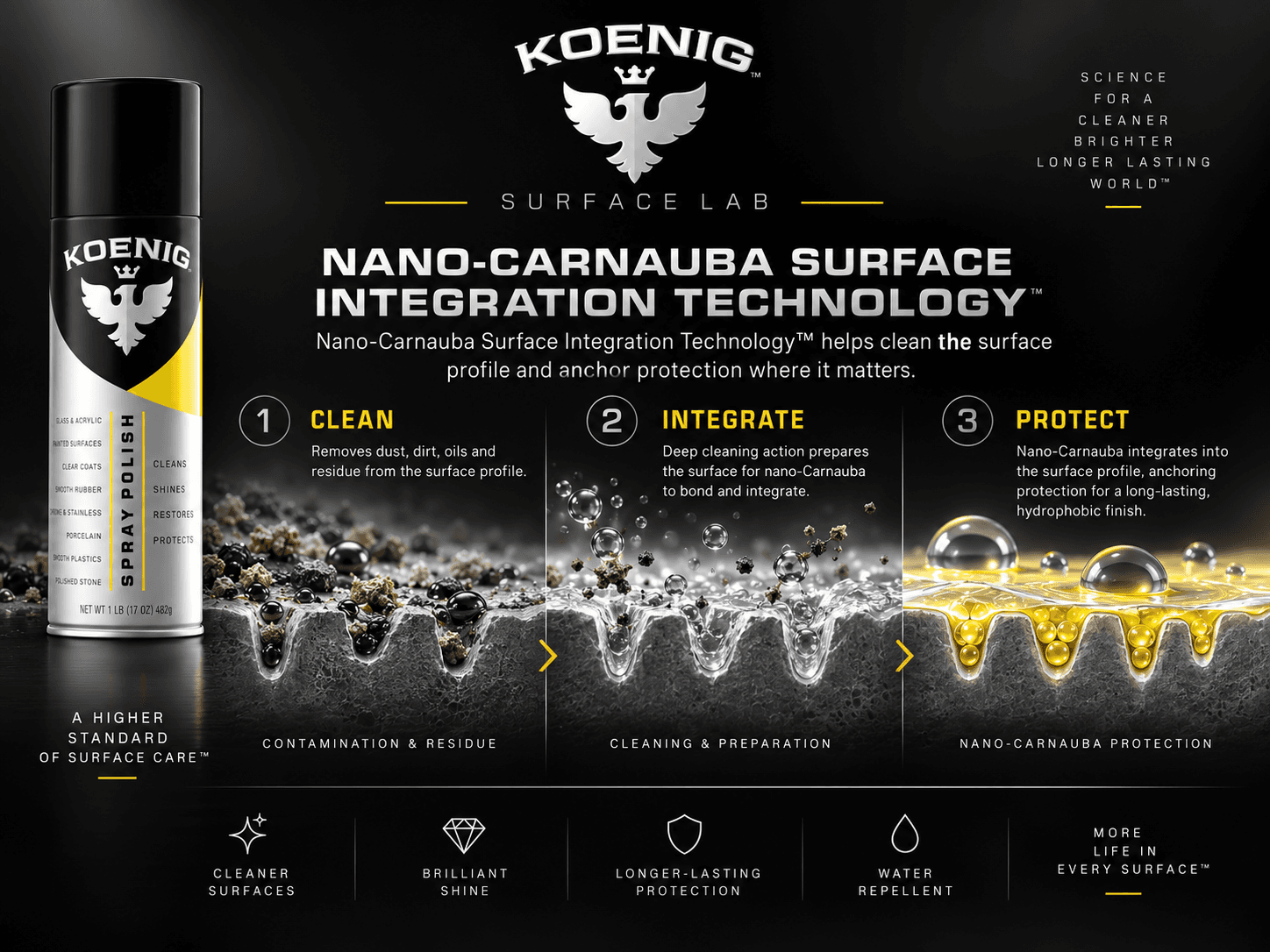
Check haze, streaking, residue, and optical artifacts in repeatable light before judging the finished result. Observe spreading, beading, and roll-off as surface behavior, not as proof that every underlying glass defect has been corrected.
Over time, track whether traffic film, ordinary contamination, and water spotting release more easily during routine glass cleaning.
Evidence and credibility
Koenig Polish has been around since 2002.
Product history does not establish compatibility with every glass coating, film, tint, or specialty treatment. Confirm the substrate and manufacturer restrictions first, then test a small area conservatively.
Product fit
Use Koenig only where the glass and coating are compatible.
Koenig can be used on compatible standard automotive glass for road film or oily haze after loose grit is removed and a small test area behaves normally.
Road and traffic film
Use a controlled wet application where ordinary oily haze or traffic residue remains after normal glass cleaning.
Compatibility first
Check aftermarket coatings, films, tint edges, specialty treatments, and manufacturer restrictions before polishing.
Separate defects
If deposits or optical marks remain after film removal, diagnose those separately instead of increasing abrasion automatically.
Related problems and next steps