Since 2002
Koenig Polish has more than two decades of product history. It is not a new trend-cycle product introduced around the latest detailing buzzword.
Once loose dirt, bonded contamination, mineral residue, and any required paint correction have been handled, Koenig can be used as the cleaner-wax, polishing, and protection step on a compatible automotive finish. The objective is a controlled finishing process on a known starting surface.
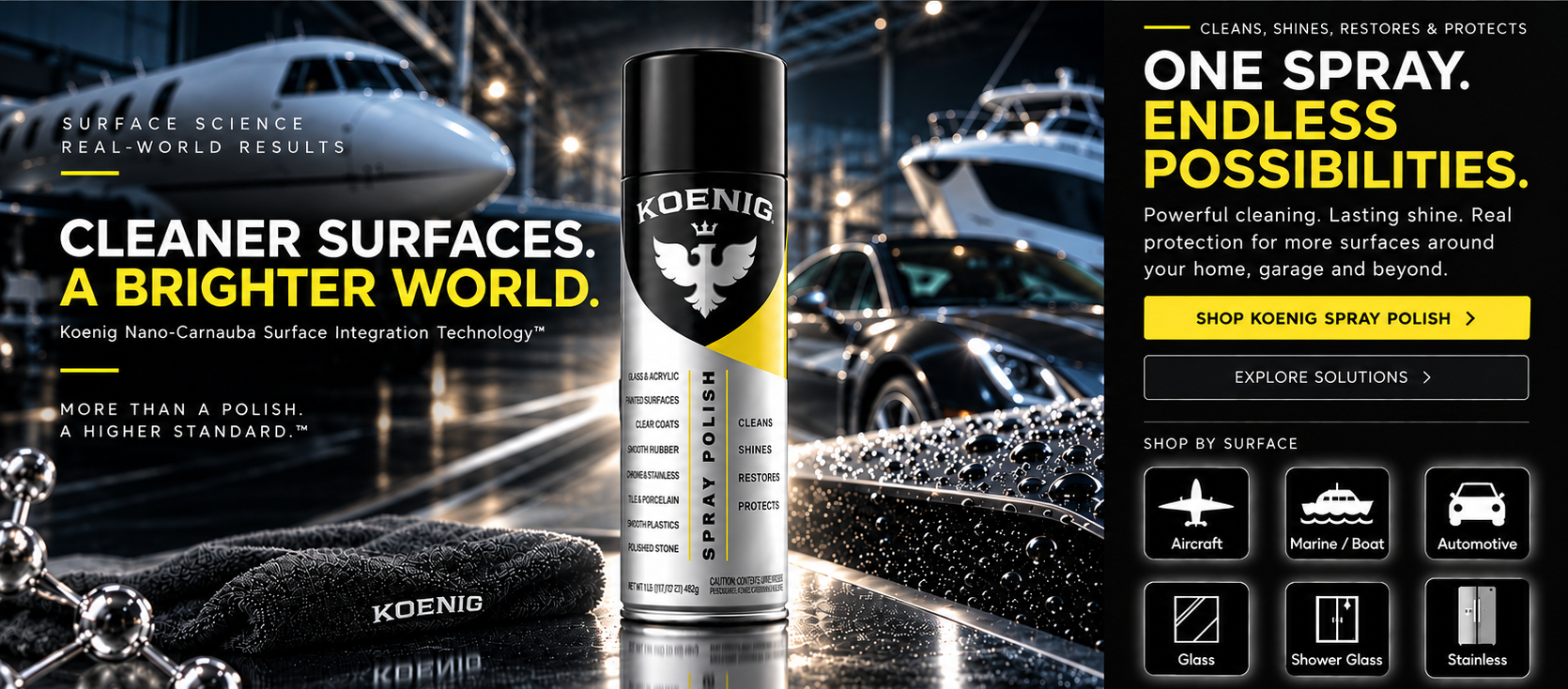
Koenig Polish has more than two decades of product history. It is not a new trend-cycle product introduced around the latest detailing buzzword.
The Corvette story below came from a customer who bought Koenig at a show, used it at home, and then followed through by sending his result.
Koenig Surface Lab separates preparation, immediate appearance, water behavior, and durability so the product can be judged by what can actually be observed.
Wash away loose grit, remove bonded contamination with the appropriate process, and correct only the defects that actually require paint correction before evaluating the finishing step.
Shake the product and work a small section at a time. Use a light application rather than flooding the panel so spreading, working time, and wipe-off remain easy to judge.
Use a clean applicator or microfiber towel with controlled pressure appropriate to the finish. Keep the process consistent from section to section instead of using extra force to chase defects that need a different correction method.
Buff with a separate clean microfiber towel, inspect gloss and residue in good light, and use the finished panel as the baseline for later maintenance observations.
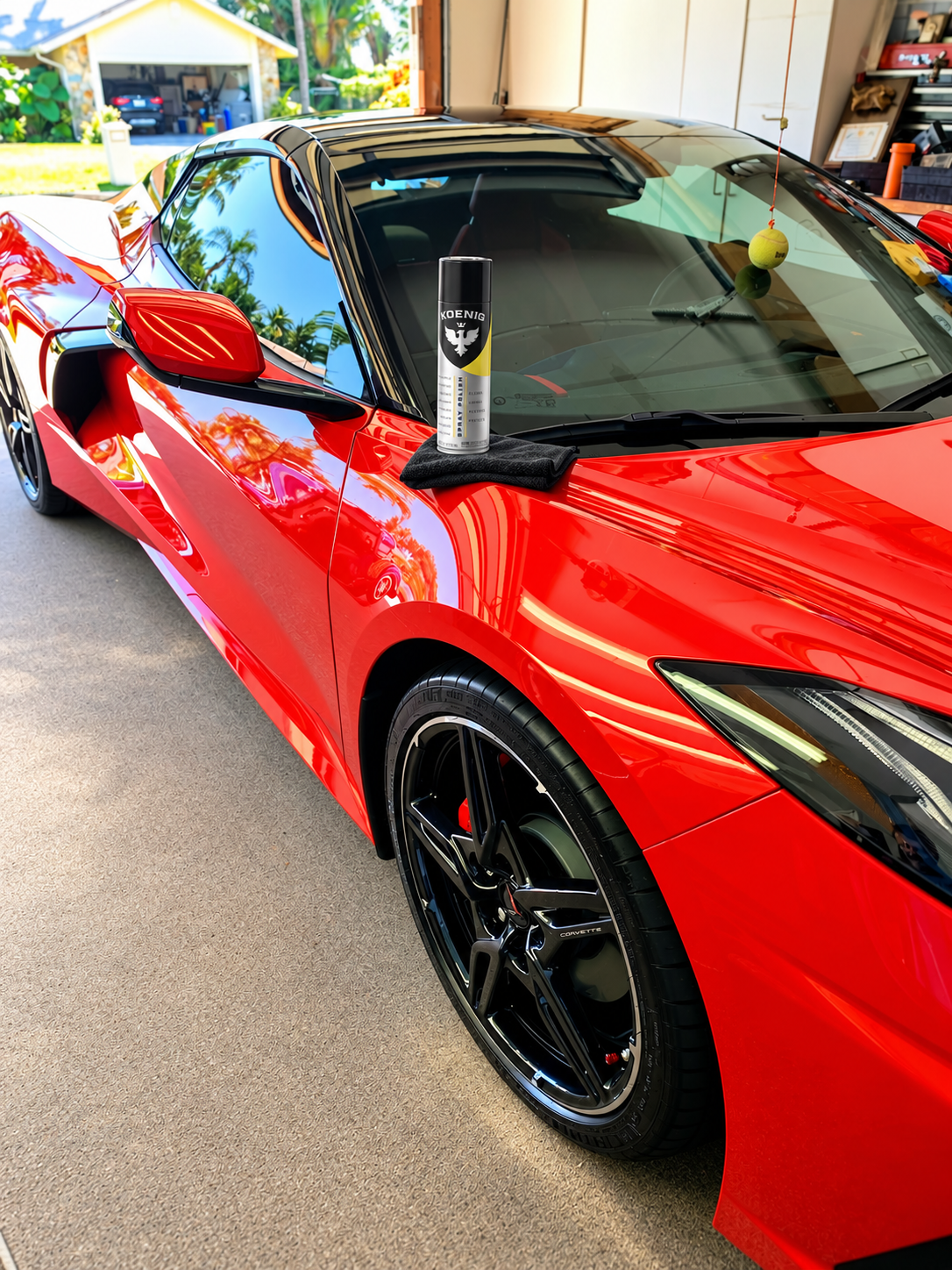
A customer bought Koenig at a show and told us he had an entire wall of other waxes at home. He said that if Koenig turned out to be the best product he had ever used, he would send us a picture.
After using Koenig on his Corvette, he followed through and sent the photo. It is a real post-purchase customer story from someone who already owned many competing waxes.
The follow-through is the proof: he said he would send a picture if Koenig became the best product he had used. After trying it, he sent one.
A washed panel can still carry fallout, mineral residue, road film, or old product. Resolve the contamination that matters before evaluating the finishing treatment.
Scratches, etched marks, oxidation, and other defects are not automatically removable contamination. Correct the finish separately when the condition and goal require it.
Koenig enters after the surface condition is understood, allowing application, gloss, wipe-off, water behavior, and maintenance to be observed from a clearer starting point.
Inspect gloss, clarity, uniformity, and visible residue under repeatable lighting after the final buff.
Track spreading, beading, and roll-off as surface behaviors without treating them as proof of every other protective property.
Observe cleaning ease and repeat the same checks after normal washing and environmental exposure to understand how the finish changes over time.
If the panel still feels rough or carries rail dust and bonded contamination, decontaminate before applying the finishing treatment.
See bonded contamination and rail dustIf visible mineral deposits remain, determine whether they are removable residue or an altered clearcoat before finishing over the area.
See automotive water spotsFor the broader preparation, protection, and measurement framework, use the Surface Lab automotive page.
Explore automotive surface care