Roughness that remains after washing can be bonded environmental fallout, rail dust, or other ferrous contamination.
Automotive decontamination | Koenig Polish since 2002
Paint still feels rough after washing? Bonded fallout and rail dust need decontamination before protection.
Rail dust, ferrous particles, and other bonded fallout are different from loose road dirt. Remove the contamination with a compatible decontamination process first, then use Koenig on the prepared finish as the cleaner-wax, polishing, and protection step.
Quick answer
Treat bonded fallout before the finishing step.
Use a compatible contamination-specific chemical or mechanical process before polishing or protection.
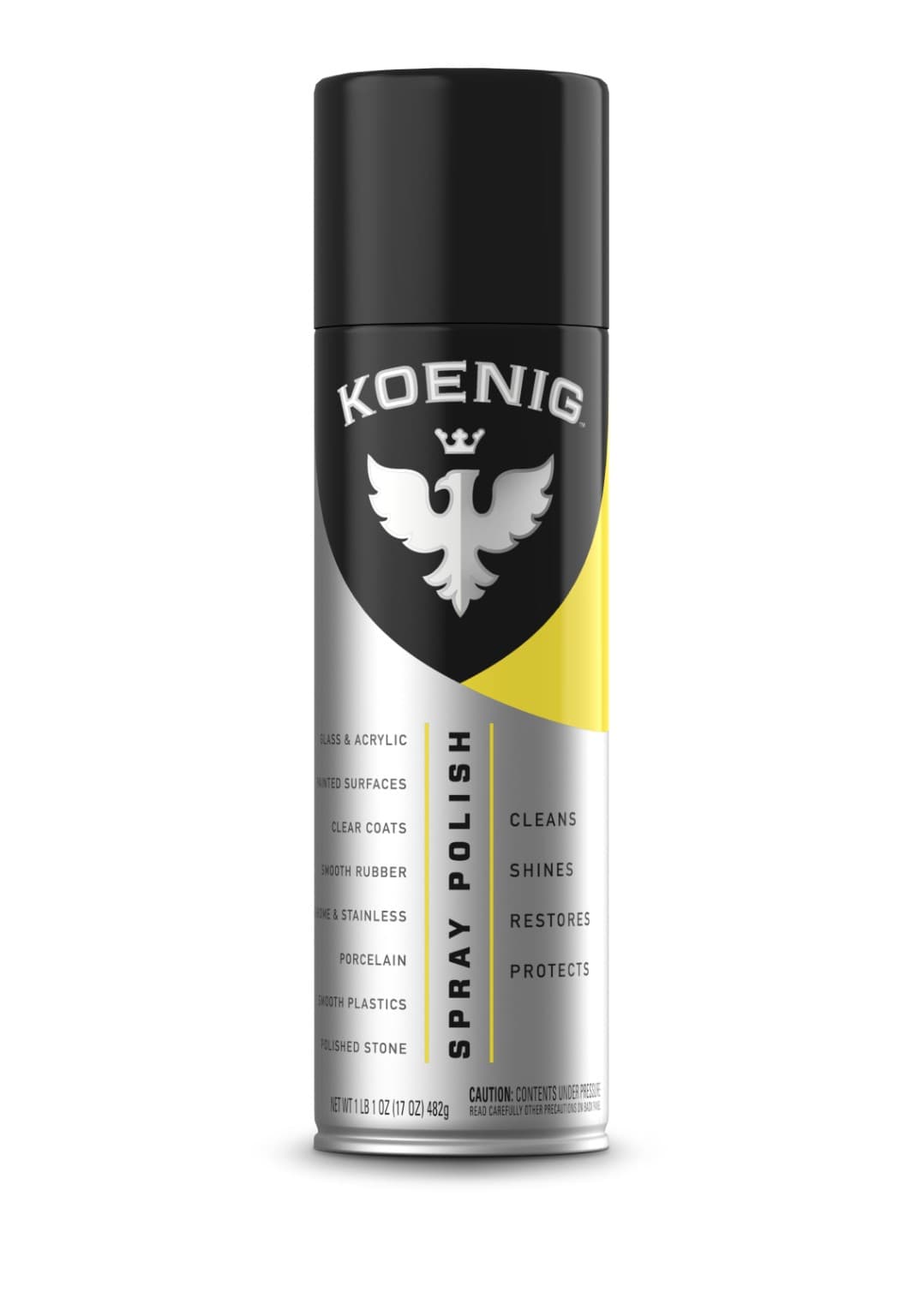
Once the bonded material is removed and the surface is understood, use Koenig on a compatible prepared finish.
Diagnose before you treat
Not everything that feels rough is the same contamination.
Airborne particles can remain attached after normal washing and may be felt as roughness even when the panel looks visually clean. Iron-containing particles can embed in the finish and oxidize.
Scratches, etching, oxidation, or other finish defects can remain after contamination is removed. Those are correction problems, not evidence that more decontamination is automatically needed.
Recommended procedure
Separate loose dirt, bonded contamination, correction, and protection.
Use the contamination-specific process first, then reassess before moving to the finishing step.
Wash away loose grit
Remove ordinary dirt, sand, and road grit first. A clean-looking panel can still have bonded particles attached to the finish.
Inspect and feel the finish
Look for visible fallout and gently assess whether the surface still feels rough after washing. Rail dust and other ferrous particles should be treated as bonded contamination rather than simple loose dirt.
Decontaminate appropriately
Use a compatible chemical or mechanical decontamination step suited to the contamination and the finish. Reassess the panel afterward instead of assuming every remaining defect is removable residue.
Finish and protect
Once the bonded contamination has been removed and the surface condition is understood, apply Koenig to a small compatible area, work it as needed, and buff the panel clear.
Proof and real-world application
Use observed surface response as context, not a universal guarantee.
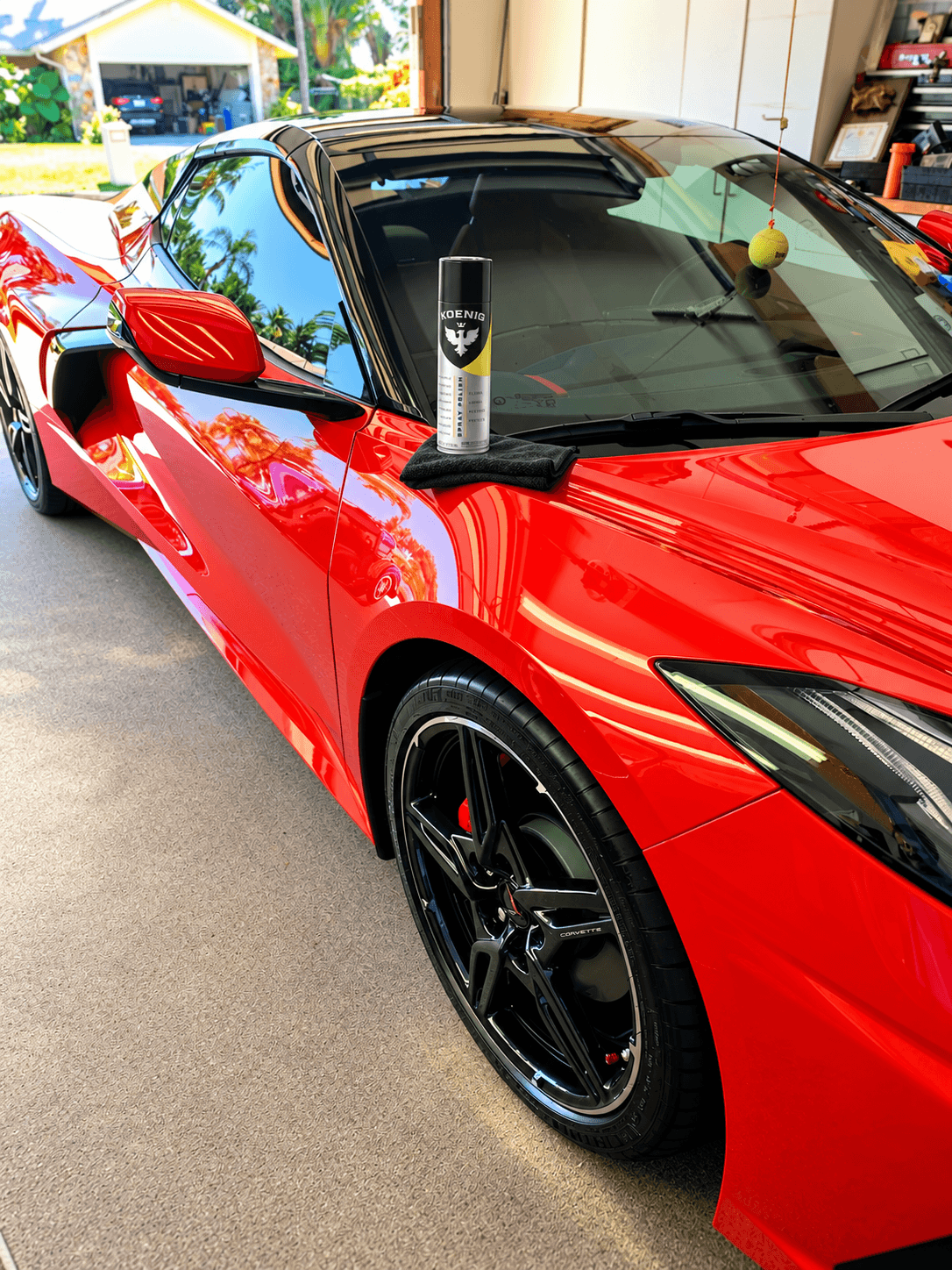
Product use on a finished vehicle does not establish that Koenig removes iron particles. The practical proof for this page is whether the contamination-specific decontamination step actually removes the bonded material before the finishing step begins.
Why it works
A prepared surface gives the finishing step a known starting point.
Judge gloss and clarity after contamination is removed so cleaning, correction, and finishing are not confused with one another. A known surface also makes spreading, wipe-off, and coverage easier to evaluate than a panel carrying unknown bonded residue.
After protection, track whether routine contamination releases more easily over repeated wash cycles rather than judging only the first-day result.
Evidence and credibility
Koenig Polish has been around since 2002.
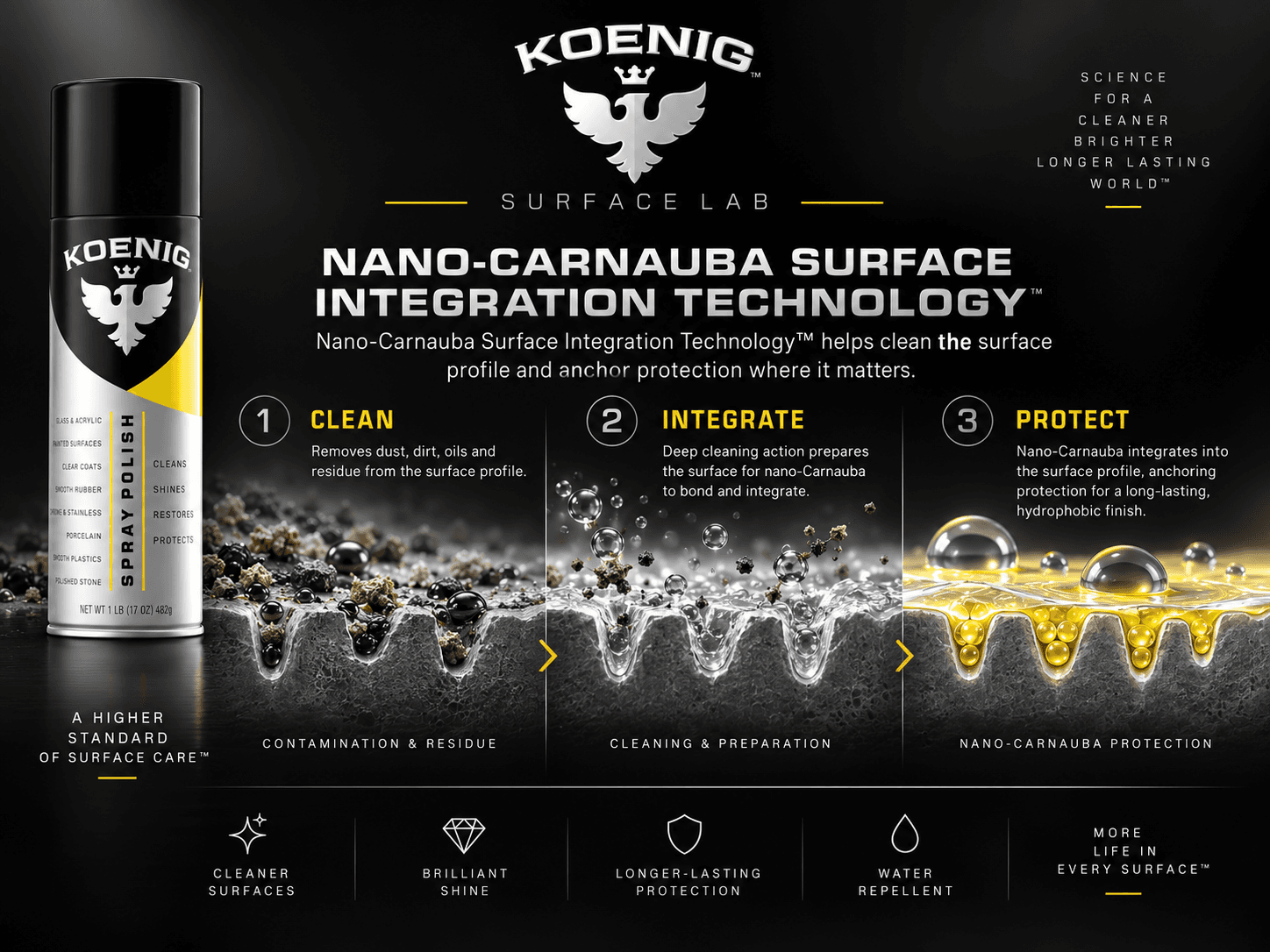
Product history establishes longevity, not proof that Koenig is a dedicated iron remover. Diagnose the contamination first, use the appropriate decontamination method, and only then evaluate Koenig as the finishing cleaner-wax, polishing, and protection step.
Product fit
Koenig belongs after the contamination-specific decontamination step.
This page does not present Koenig as a dedicated iron remover. Use it on a compatible automotive finish after bonded fallout has been removed and the surface condition is understood.
Prepared paint
Begin the Koenig step only after loose grit and bonded fallout have been addressed.
Finishing action
Use Koenig as the cleaner-wax, polishing, and protection step on the prepared finish.
Maintenance
Track later contamination release and wash behavior over repeated maintenance cycles.
Related problems and next steps