After normal washing, remaining residue may be bonded road film, bug residue, tar, or sap.
Automotive contamination | Koenig Polish since 2002
Road grime, bugs, tar, or tree sap still there after washing?
Start by removing loose grit. Then work a small area wet with controlled pressure so you can judge how the finish responds before escalating.
Quick answer
Start with a small, wet test area.
Do not attack a stubborn spot with dry friction or a hard scraper.
Remove loose grit, work wet, use controlled pressure, and stop if the finish reacts abnormally.
Diagnose before you treat
Separate removable contamination from finish damage.
Aged sap, tar, staining, etching, or transferred paint can look similar even though they do not all respond to the same correction method.
If the coating softens, discolors, or does not respond normally, stop rather than forcing the spot. The surface condition should decide the next step.
Recommended procedure
For bugs, road film, tar, and sap on compatible automotive finishes.
Use the least aggressive process that works, and keep the cleaning action controlled.
Remove loose grit
Clear away sand and loose soil first so spot cleaning does not turn that grit into an abrasive.
Apply Koenig to the affected area
Work a light application on a small section instead of flooding a large panel.
Wipe the contamination away
Use a clean towel and controlled pressure. If the spot needs more work, repeat the wet application rather than scraping aggressively.
Buff the panel
Finish with a clean microfiber towel so the area is left polished after the contamination is removed.
Proof and real-world application
Use real-world results as context, not a universal guarantee.
Product history and contamination removal are different kinds of evidence. The practical test is still the finish in front of you and how it responds to a controlled wet process.
Why it works
Work wet, minimize unnecessary friction, and evaluate the surface as you go.
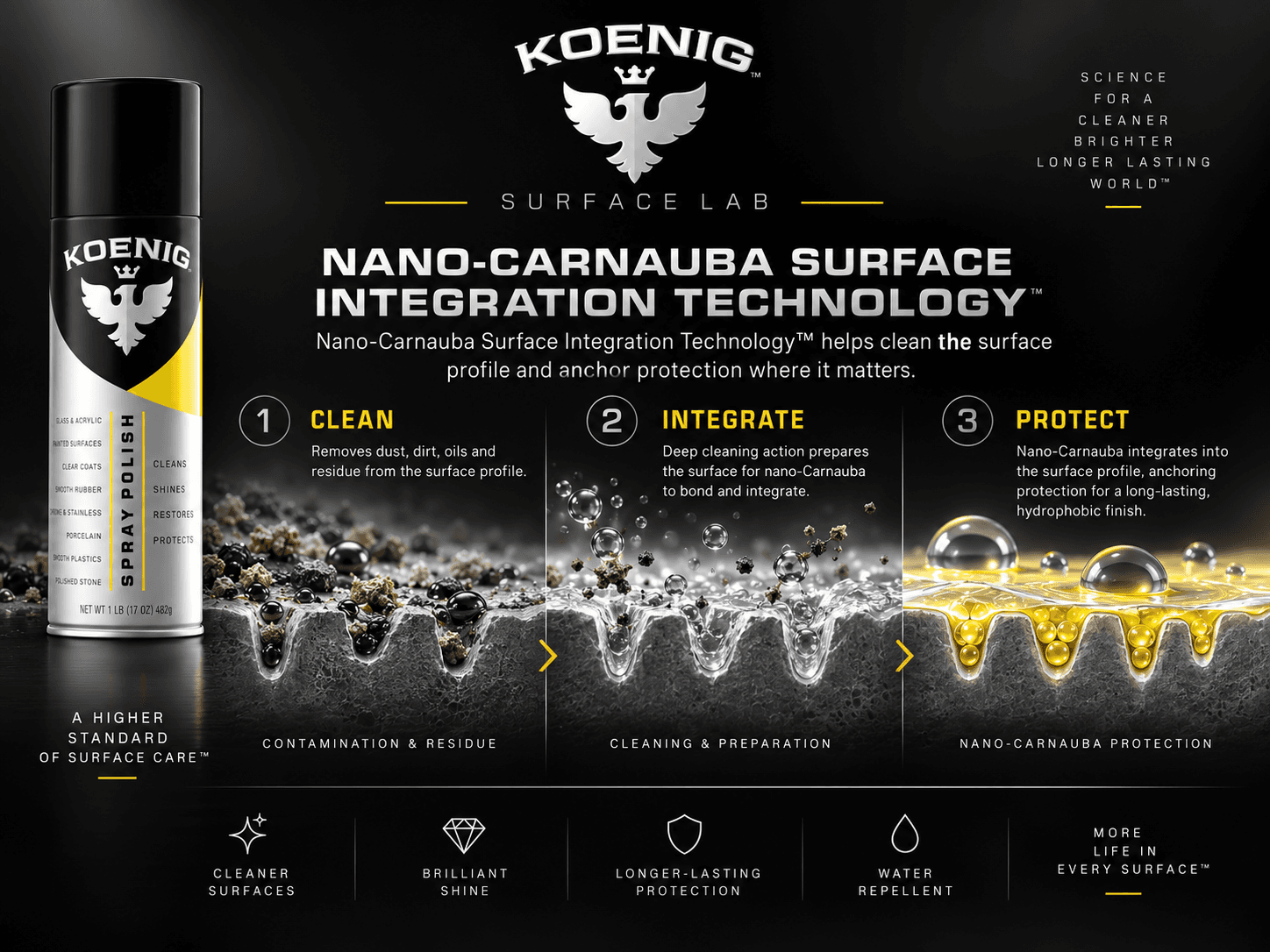
A wet application gives the cleaning step time to work before the final buff. Controlled pressure also reduces the temptation to turn a stubborn contaminant into a dry-friction paint-correction problem.
Evidence and credibility
Koenig Polish has been around since 2002.
Longevity establishes product history, not proof that every contaminant or finish will respond the same way. Diagnose first, test a small area, and stop when the surface tells you the method is not appropriate.
Product fit
One vehicle product, several common contamination problems.
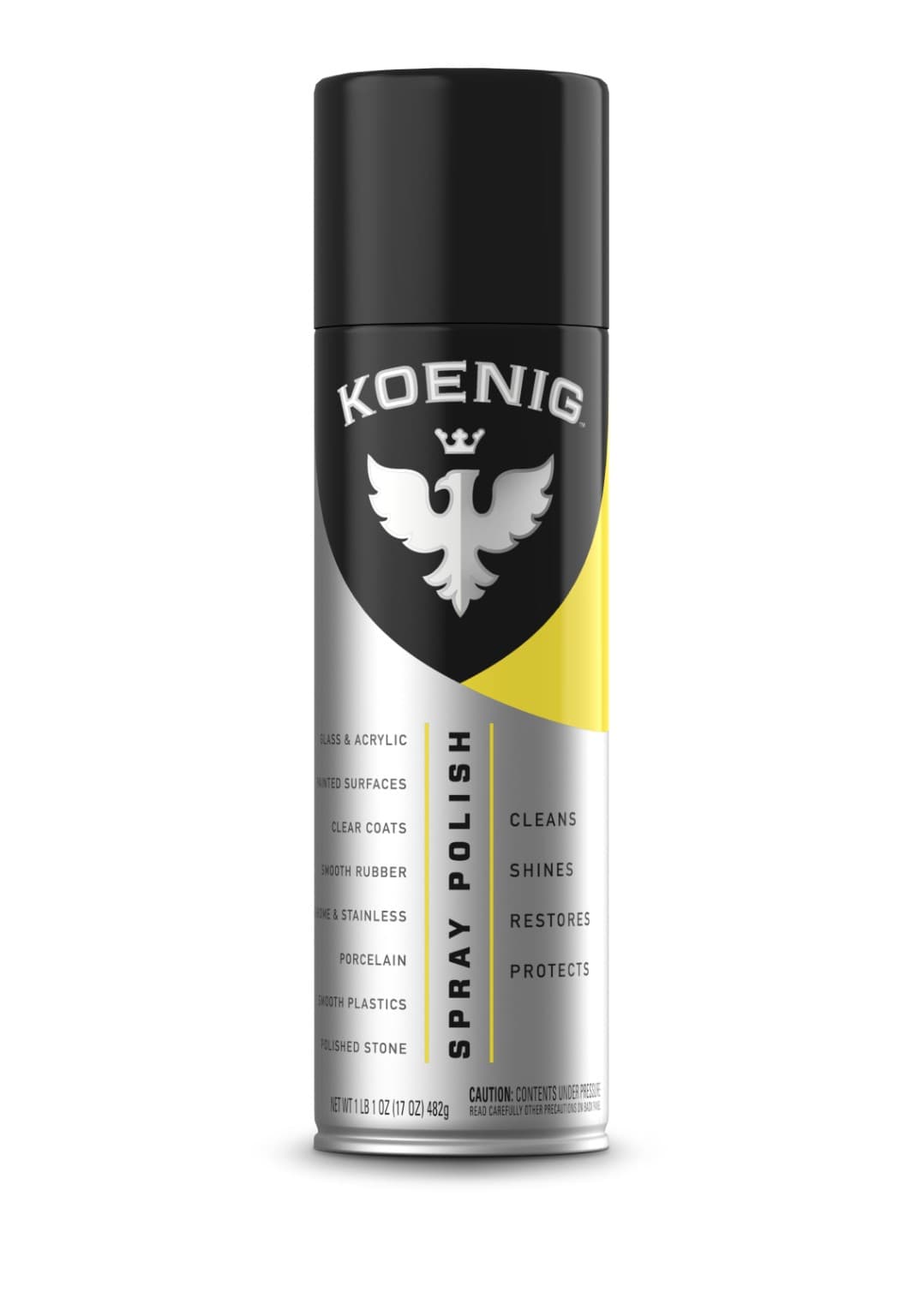
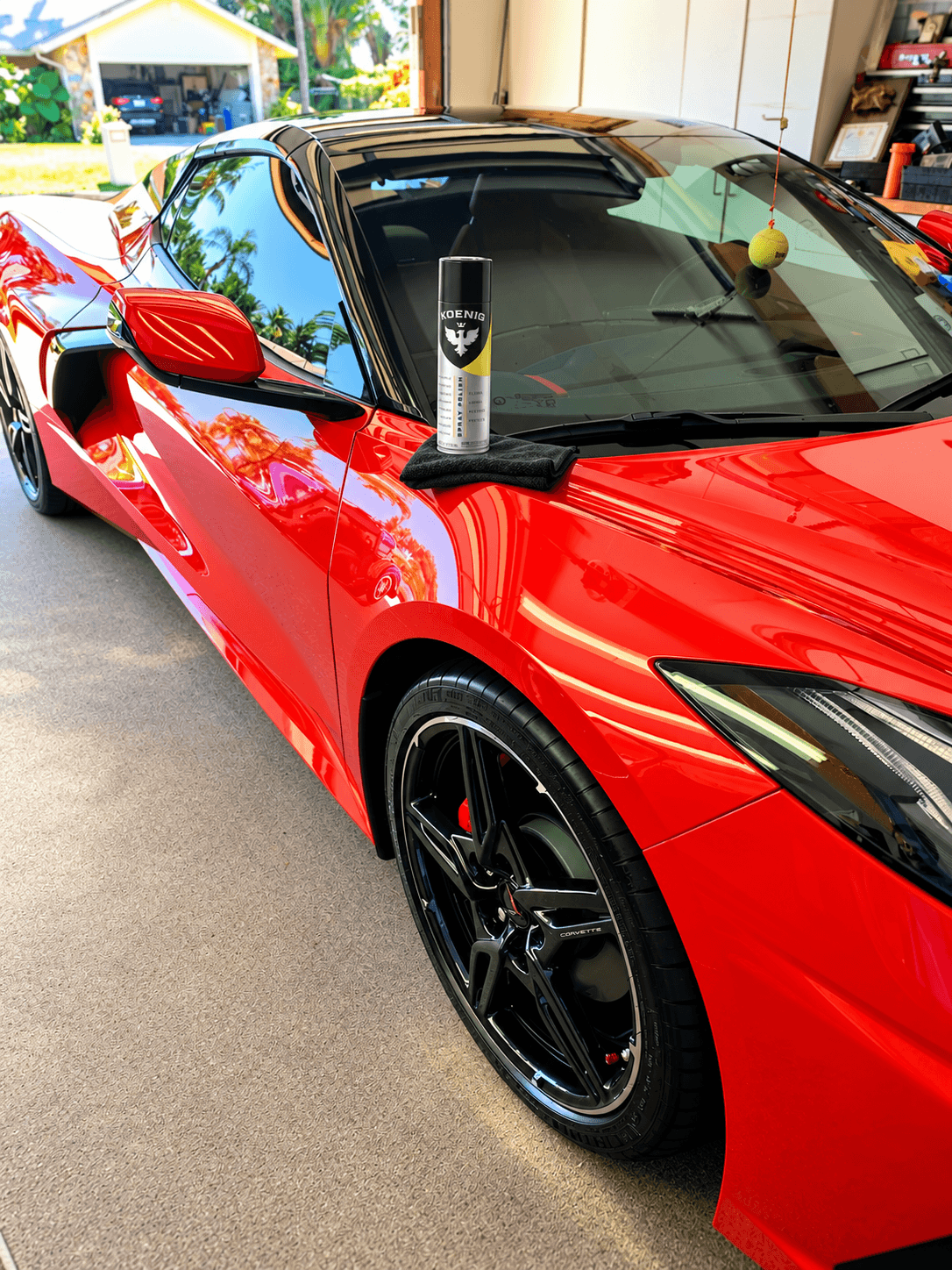
Koenig fits after ordinary washing when compatible automotive finishes still have residue that needs controlled spot cleaning and a final buff.
Road grime and film
Use after ordinary washing when bonded film or grime is still dulling the finish.
Bugs, tar, and tree sap
Work wet on a small section and repeat as needed instead of scraping aggressively.
Finish protection
After cleaning, buff the area clear so the surface is left polished and protected.
Related problems and next steps