
Hard-water spots, calcium-rich deposits, soap-related film, and etched glass can look similar but do not respond the same way.
Shower glass restoration | Mineral deposits and haze
Remove hard-water stains, mineral deposits, and haze from shower glass.
Start by separating ordinary film from bonded mineral buildup. Restore the surface only as far as the glass condition allows, and stop when the remaining mark behaves like etching rather than removable contamination.
Quick answer
Mineral removal comes before polishing and prevention.
Use the least aggressive compatible method first and reserve mechanical escalation for a confirmed surface that allows it.
If the deposit is removed but the mark remains, more cleaning may not reverse actual surface alteration.
Diagnose before you treat
Separate removable mineral buildup from possible glass etching.
Hard water leaves dissolved minerals behind as droplets dry. Repeated wet-dry cycles can turn fresh spotting into more persistent deposits and visible haze.
The key diagnostic step is re-inspection after surface contamination has been removed. A cleaner can remove mineral material without repairing glass that has already been etched or otherwise altered.
Recommended procedure
Restore compatible shower glass without treating every mark as dirt.
Work from surface identification to deposit removal, then judge whether the remaining defect is still removable.
Confirm the substrate
Verify that the surface is compatible shower glass. Acrylic, polycarbonate, coated, tinted, painted, and specialty transparencies need different compatibility rules.
Remove loose debris and routine film
Rinse away loose grit and clean ordinary residue first so the remaining mineral pattern can be evaluated clearly.
Apply Koenig to a small section
Work wet in a manageable test area and inspect how the glass responds before treating the full door.
Escalate only on confirmed standard uncoated glass
For stubborn mineral deposits, the established Koenig method uses genuine 0000 super-fine steel wool with the wet product and controlled pressure. Do not use this method on coated, tinted, painted, acrylic, polycarbonate, or specialty surfaces unless specifically approved.
Buff clear and re-inspect
Use a clean microfiber towel, then look for remaining haze or marks. If the deposit is gone but a defect remains, treat it as possible etching or surface alteration rather than endlessly increasing abrasion.
Why it works
Removal, optical restoration, and protection are separate outcomes.
A surface can become cleaner without becoming optically perfect. That distinction matters because stubborn marks sometimes remain after the removable mineral layer is gone.
Judge clarity after buffing under repeatable lighting, then move to maintenance and protection only after the restoration step is complete.
Product fit
Use the product on the condition it can actually address.
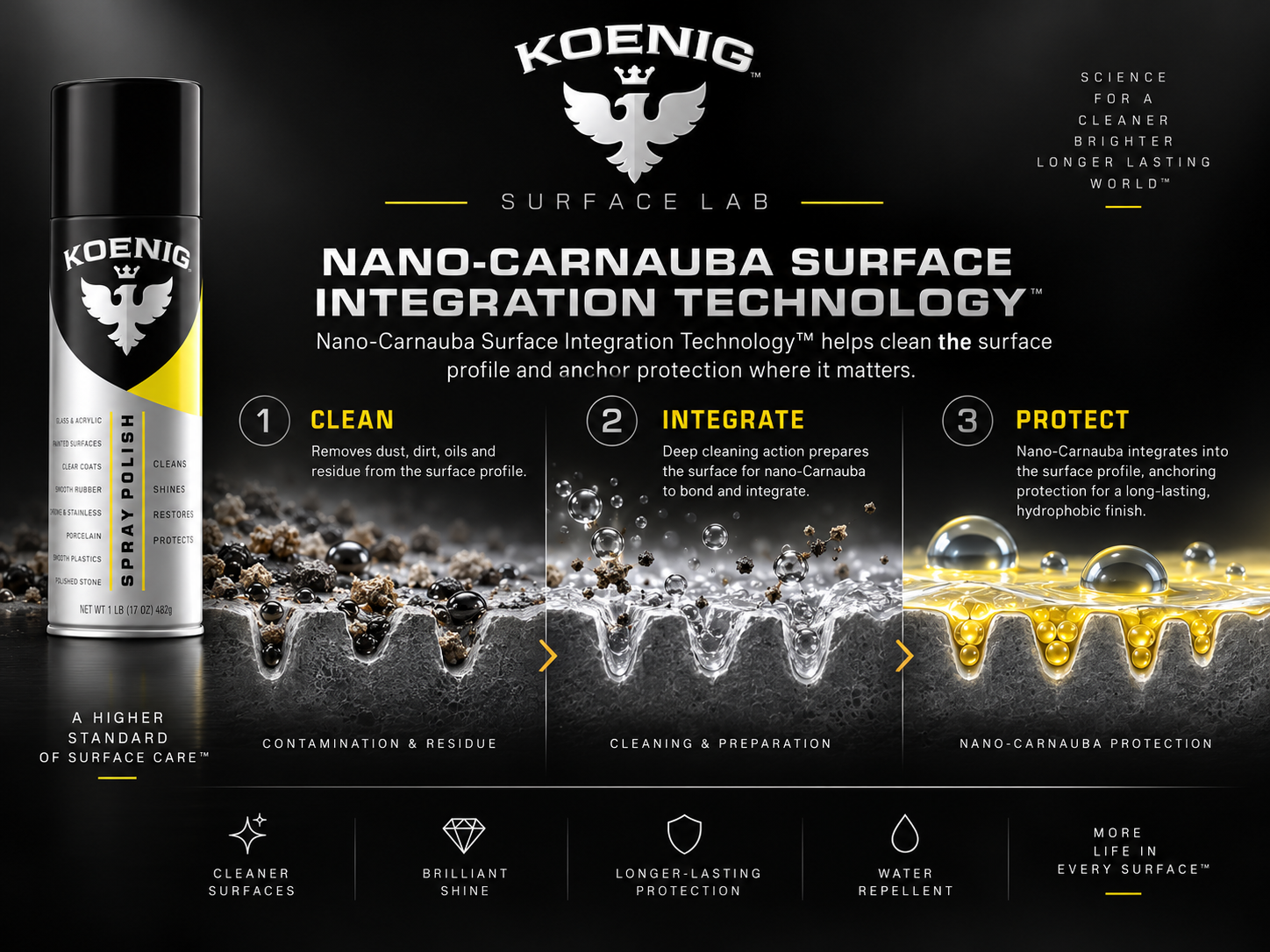
Koenig belongs in the cleaning, polishing, and protection workflow for compatible shower glass, but it does not turn etched or damaged glass into new glass.
Mineral deposits
Work bonded surface deposits wet and re-inspect after each controlled pass.
Soap-related haze
Remove ordinary film first so mineral spotting and true surface defects are easier to distinguish.
Protection afterward
Once clarity is restored as far as the glass condition allows, shift to routine maintenance and prevention rather than repeated correction.
Shower glass FAQ
Common questions about hard-water restoration.
How do I know whether a mark is a mineral deposit or etched glass?
Remove surface contamination first and re-inspect the glass. If the deposit is gone but the visual defect remains, the glass may be etched or otherwise altered rather than simply dirty.
Can 0000 steel wool be used on every shower door?
No. The established Koenig method is limited to confirmed standard uncoated glass. Do not use steel wool on tinted, coated, painted, acrylic, polycarbonate, or specialty surfaces unless the manufacturer specifically approves it.
What should I do after the mineral buildup is removed?
Buff the glass clear, inspect the result, and move to a consistent drying and maintenance routine to reduce repeated mineral loading.
Related problems and next steps