
Use this page for ordinary shower-door film, residue, clarity, and ongoing maintenance.
Shower glass care | Routine cleaning and polishing
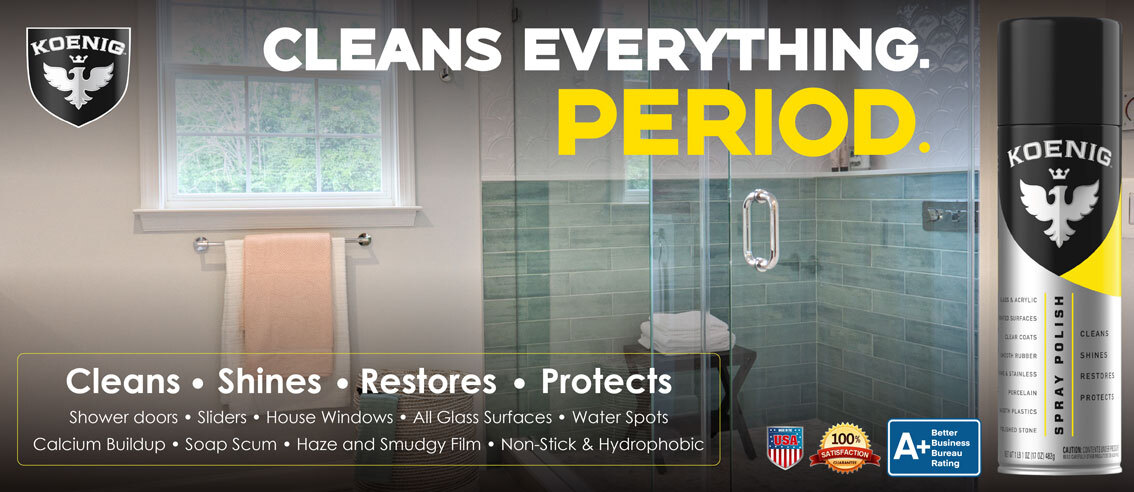
Shower glass cleaner and polish for clear shower doors.
Use a controlled routine-cleaning process for soap-related film, residue, and everyday loss of clarity. If bonded mineral deposits remain, move to the dedicated hard-water restoration path instead of scrubbing harder.
Quick answer
Clean routine residue first. Diagnose what remains.
If spots or haze remain bonded after normal cleaning, use the mineral-deposit restoration process.
Confirm you are working on compatible glass rather than acrylic, polycarbonate, coated plastic, or an unknown specialty surface.
Diagnose before you treat
Is the problem routine film or bonded mineral buildup?
Soap-related film, product residue, and ordinary bathroom contamination can make shower glass look dull even when the glass itself is still in good condition.
Hard-water minerals behave differently. If normal cleaning restores most clarity but distinct spots, crust, or haze remain, stop treating the problem like ordinary dirt and move to the dedicated hard-water process.
Recommended procedure
A simple routine for compatible shower glass.
Use the least aggressive process that restores clarity, and inspect the surface before repeating.
Rinse away loose debris
Remove loose grit and ordinary debris first so routine cleaning does not turn particles into unnecessary abrasion.
Apply a light amount
Work one manageable section at a time instead of flooding the entire shower door.
Wipe the surface clean
Use a clean towel with controlled pressure to lift residue and soap-related film from compatible glass.
Buff for clarity
Finish with a clean microfiber towel and inspect under good lighting for streaks, haze, or remaining bonded deposits.
Proof and real-world application
Routine cleaning and restoration are different jobs.
A shower door can have both ordinary film and bonded mineral contamination. Separating those conditions prevents a maintenance problem from becoming an unnecessary abrasion problem.
If a mark remains after routine cleaning, identify whether it is mineral buildup, a coating issue, or possible etching before escalating.
Why it works
A clean surface makes later water behavior easier to evaluate.
Residue and mineral contamination can change both optical clarity and how water behaves on glass. Cleaning first gives you a more honest baseline before judging polish, protection, beading, or later maintenance ease.
Product fit
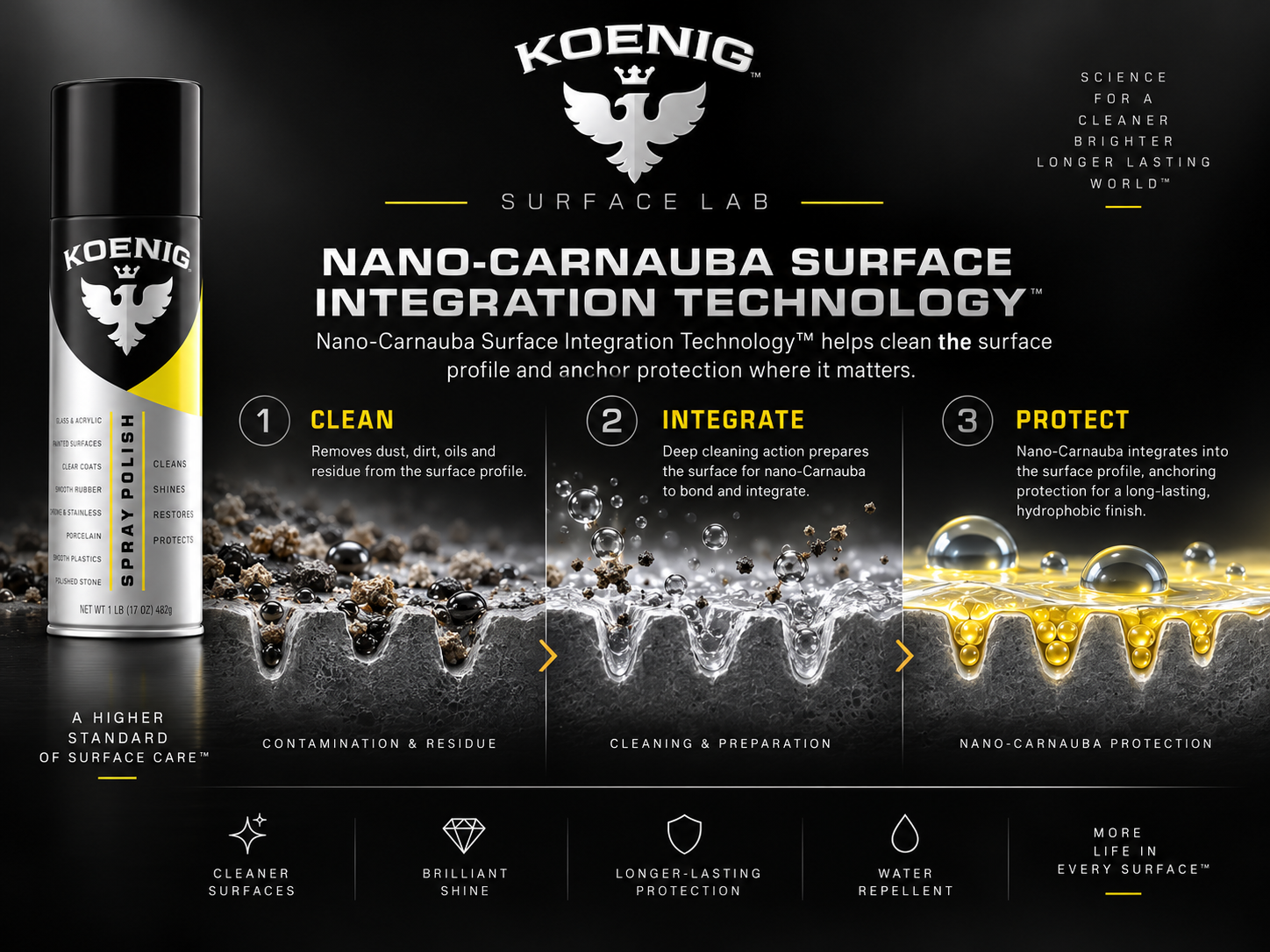
Use Koenig as the clean, polish, and protect step on compatible shower glass.
Keep the application controlled and separate everyday maintenance from heavy mineral restoration.
Routine film
Address soap-related film and ordinary residue before it builds into a harder maintenance problem.
Clarity and buffing
Buff with a clean microfiber towel and inspect the glass under good lighting rather than judging while it is still wet.
Ongoing maintenance
After the glass is clean, use consistent drying and maintenance habits to reduce repeated mineral loading.
Shower glass FAQ
Common questions about routine shower glass care.
Is routine shower-glass cleaning the same as hard-water restoration?
No. Routine cleaning focuses on soap-related film, residue, and ongoing clarity. Bonded mineral deposits and hard-water haze belong on the dedicated restoration path.
Should I test the product before treating the full shower door?
Yes. Confirm the surface is compatible glass, follow manufacturer restrictions, and test a small inconspicuous area before broader use.
What if marks remain after the surface is clean?
A remaining mark may be bonded mineral material, etching, coating damage, or another surface condition. Diagnose it before increasing friction or chemistry.
Related problems and next steps