Routine exterior cleaning, gloss maintenance, and light polishing on compatible finishes.
Motorcycle Surface Care
Motorcycle Cleaner, Polish & Wax for Exterior Surface Care
Use a material-first process for routine motorcycle exterior cleaning, light polishing, gloss maintenance, and protection. Paint, chrome, plastics, transparent windscreens, and specialty finishes should not all be treated as the same surface.
Quick answer
Motorcycle care at a glance
Identify the material and finish before applying any polish.
Heavy oxidation, deep defects, damaged coatings, or embedded contamination need a different correction process.
Diagnose before you treat
Know the surface before you polish.
A motorcycle combines several materials within a small area. Identify the actual material and finish before deciding how aggressively to clean or polish it.
Painted panels and clear coat
Remove loose contamination first, then test a small area. Treat failing clear coat, deep defects, and unknown repaint work as correction problems rather than routine polishing.
Chrome and polished metal
Confirm whether the part is chrome, plated, bare polished metal, anodized, coated, or another finish. Similar-looking metals can require different care.
Plastic trim and textured surfaces
Do not assume a polish intended for a smooth painted surface belongs on every textured, matte, satin, or unpainted plastic part.
Acrylic or polycarbonate windscreens
Transparent motorcycle screens are often not ordinary glass. Manufacturer instructions and a compatibility test should override generic polishing advice.
Common Motorcycle Problems
Match the process to the contamination or defect.
Road film and light grime
Remove loose dirt first, then address the remaining film with a controlled wipe-and-buff process on compatible finishes.
Bug residue and organic contamination
Soften stubborn residue before wiping. Do not turn dried contamination into an abrasive scrubbing step.
Fingerprints and light residue
Use a small amount of product and clean microfiber rather than repeatedly layering more product onto the surface.
Dullness and reduced gloss
Light polishing can improve the appearance of a compatible finish, but oxidation, coating failure, and deep defects require separate diagnosis.
Light water spotting
First determine whether the mark is removable surface residue or a defect that has etched or damaged the finish.
Heavy oxidation or damage
Stop routine maintenance and move to a material-appropriate correction plan instead of increasing pressure indefinitely.
Recommended procedure
A conservative motorcycle cleaning and polishing process.
The safest workflow removes abrasive contamination first, identifies the finish, tests compatibility, then uses the least aggressive process that solves the problem.
Work on a cool, dry surface
Move out of direct sun when possible and let hot painted, metal, and transparent surfaces cool before application.
Remove loose dirt and grit first
Rinse or wash away abrasive debris before wiping. Do not use polish as a substitute for removing loose road grit.
Identify the material and test a small area
Confirm whether the part is painted, plated, polished metal, textured plastic, acrylic, polycarbonate, or another specialty finish, then test an inconspicuous area.
Apply a light amount to one section
Use a clean applicator or microfiber and work a manageable section instead of flooding the surface.
Wipe clean and buff
Use clean microfiber towels and controlled pressure. Inspect the finish rather than repeatedly rubbing a defect that may require a different correction method.
Stop and escalate when the defect remains
Deep scratches, failing clear coat, heavy oxidation, etched spotting, or damaged specialty finishes are not routine maintenance problems.
Material Boundaries
Specialty finishes can override a general polishing process.
Use extra caution with damaged or failing clear coat, matte and satin finishes, coated specialty parts, soft transparent plastics, heavily oxidized metal, and any component with manufacturer-specific care instructions.
A product that works well on one motorcycle surface should not automatically be carried onto the next material simply because the parts are adjacent.
If the surface is unknown, identify it before continuing. Surface Science explains why material, contamination, and finish condition change the treatment boundary.
Why it works
Where Koenig's nano-clay and nano-Carnauba system fits.
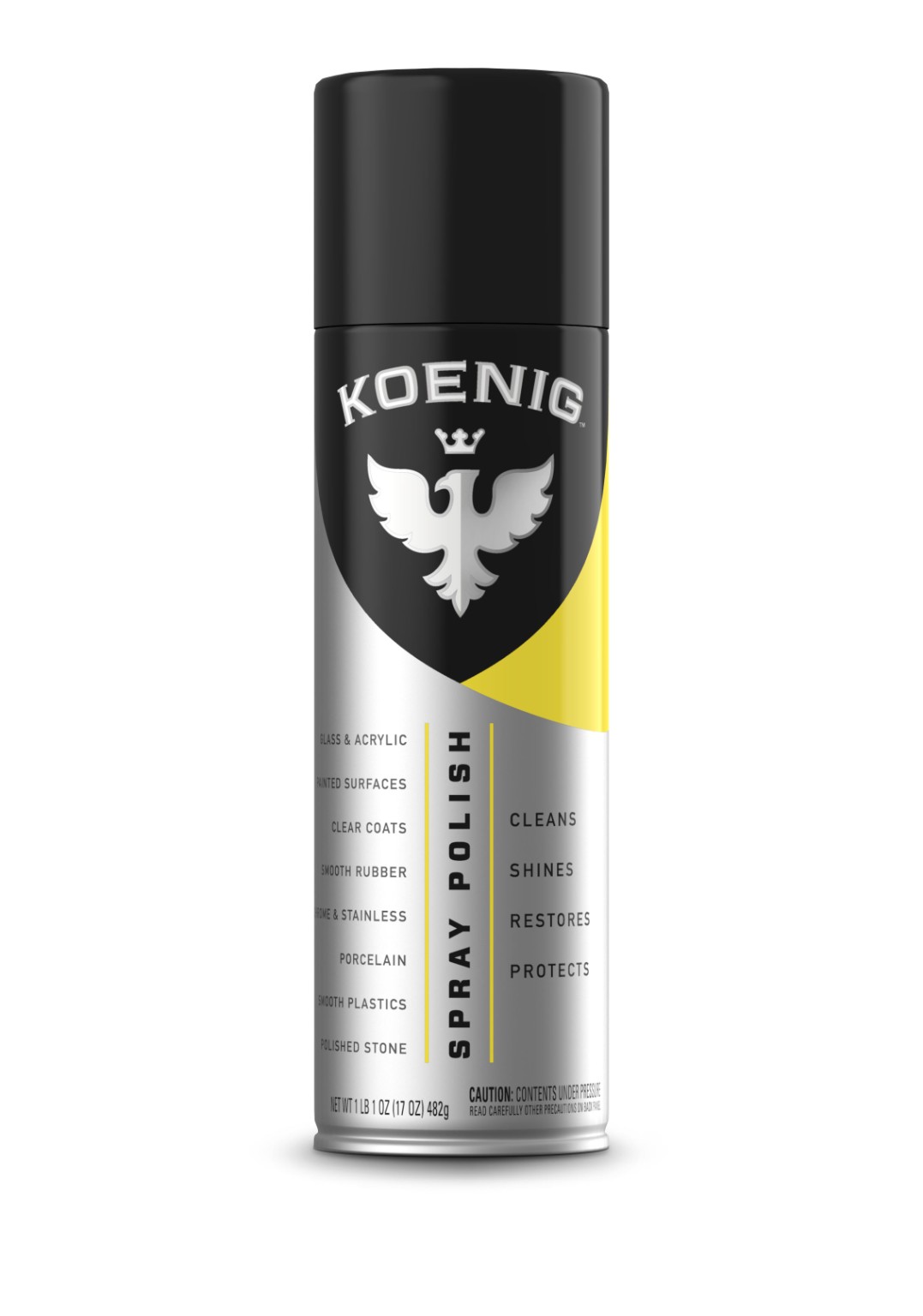
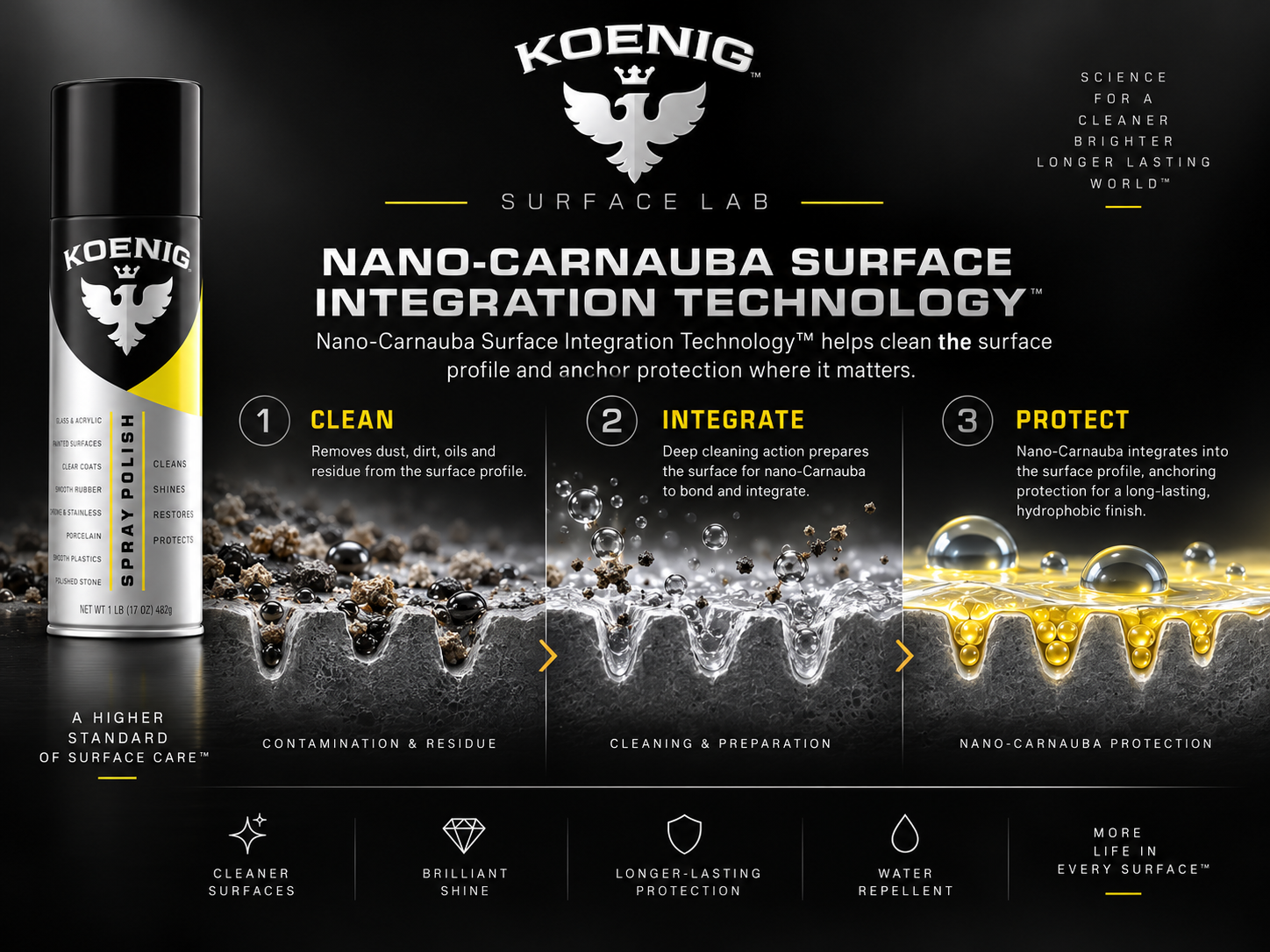
Koenig Polish combines a nano-clay cleaning and polishing approach with nano-Carnauba surface protection. On a compatible, properly prepared motorcycle finish, that makes it most useful as a controlled maintenance and finishing step rather than a substitute for deep defect correction.
The sequence still matters: remove abrasive debris, identify the surface, correct heavier defects when needed, then use the finishing product on the prepared compatible surface.
Product fit
Where this Motorcycle process fits.
Use the product as part of a material-aware maintenance process, not as permission to polish every motorcycle surface the same way.
Routine exterior maintenance
A good fit when compatible motorcycle exterior surfaces need light cleaning, polishing, gloss maintenance, and protection.
Prepared painted and polished surfaces
Useful as a finishing maintenance step after loose contamination has been removed and the surface condition has been identified.
Compatibility first
Do not assume one process fits matte, satin, coated, textured, plated, or transparent materials. Manufacturer-specific care guidance takes priority.
Motorcycle FAQ
Common questions about motorcycle exterior care.
Can I use Koenig Polish on motorcycle paint?
Use it only after confirming the paint and finish are compatible, removing loose grit, and testing a small inconspicuous area. Damaged clear coat, matte or satin finishes, and specialty coatings may require different care.
What about chrome and polished metal?
Identify whether the part is true chrome, plated metal, bare polished metal, coated metal, or another finish before polishing. Start conservatively and stop if the finish reacts unexpectedly.
Can I use it on a motorcycle windshield?
Do not assume a motorcycle windshield is ordinary glass. Many are acrylic, polycarbonate, coated plastic, or another transparent material. Follow the manufacturer guidance and test compatibility before using any polish.
Does this replace heavy oxidation or scratch correction?
No. Heavy oxidation, deep scratches, failing coatings, etched defects, and damaged finishes need diagnosis and a correction process matched to the material.
Do I need to wash the motorcycle first?
Remove loose dirt, grit, and abrasive debris first. A full wash is appropriate when the motorcycle is dirty enough that wiping could drag contamination across the finish.
Related problems and next steps