
Natural stone can vary by finish, porosity, treatment, and prior sealer. Follow the care guidance for the installed surface.
Polished stone care | Granite, quartz, and marble
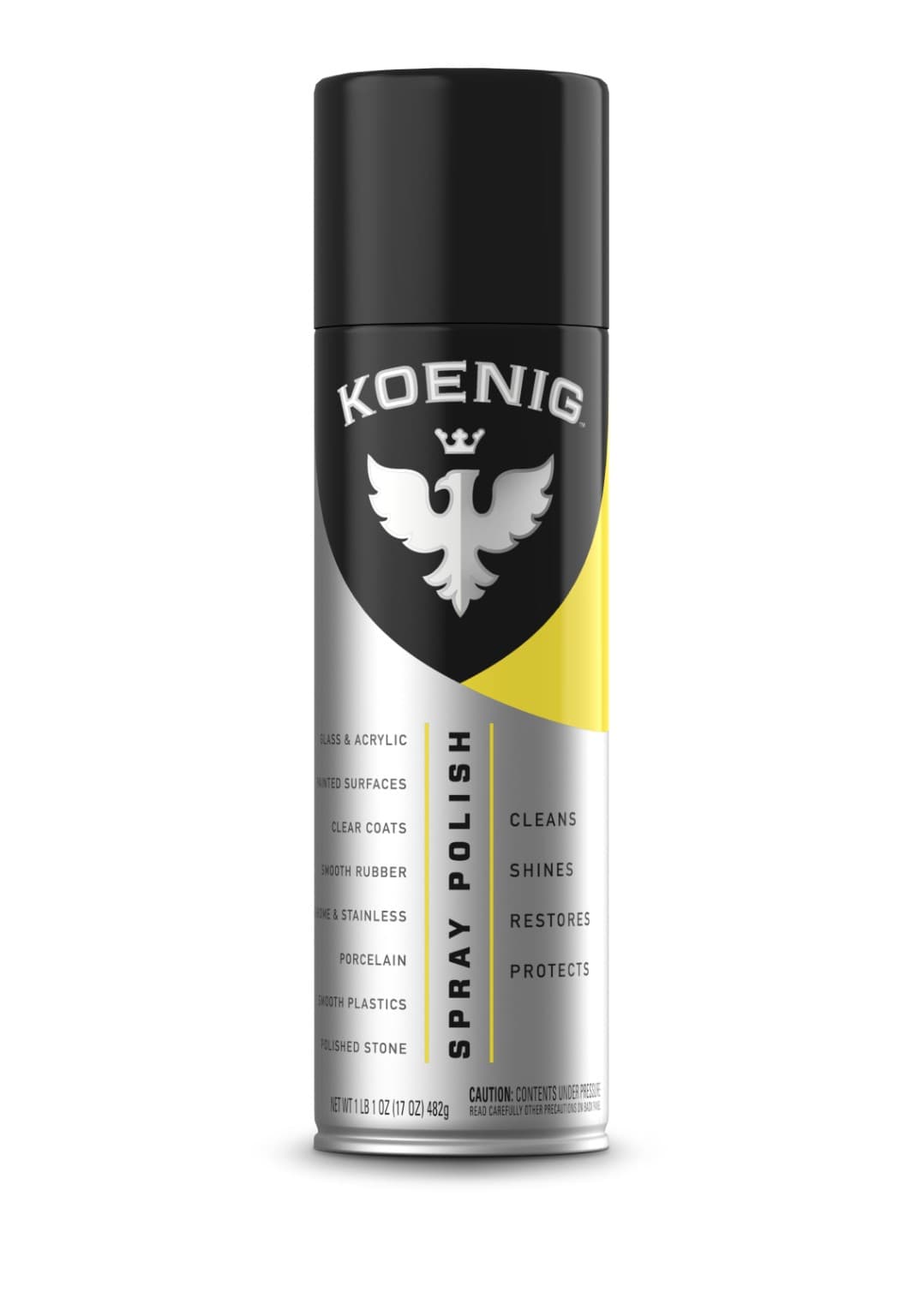
Cleaner and polish for granite, quartz, and marble surfaces.
Start with material identification and a small test area. Clean and buff compatible polished surfaces without pretending that residue, stains, etching, scratches, and worn finish are the same problem.
Quick answer
Material identification comes before polishing.
Engineered quartz includes resins and manufacturer-specific finish requirements, so do not assume every natural-stone process transfers directly.
Marble can show etching, scratches, stains, or finish wear that ordinary cleaning and polishing will not necessarily correct.
Diagnose before you treat
Decide whether you are cleaning residue or trying to correct the surface itself.
Grease film, fingerprints, ordinary residue, dried product, stains, scratches, etching, and worn finish can all make a polished countertop look dull, but they are not equivalent conditions.
A routine cleaner-and-polish process belongs on a compatible surface that is fundamentally intact. Stop if the test area shows haze, discoloration, finish change, or another abnormal response.
Recommended procedure
Use a light, controlled process on compatible polished stone.
The goal is to clean and buff the surface without using routine maintenance as a substitute for stone repair.
Identify the surface and finish
Confirm whether you are working on granite, engineered quartz, marble, or another polished stone, and check manufacturer care restrictions before treatment.
Remove loose grit and debris
Clear particles first so routine wiping does not create unnecessary abrasion on a polished surface.
Test a small inconspicuous area
Use a light amount and check for haze, residue, gloss change, discoloration, or any other unexpected response.
Work a manageable section
Apply lightly, wipe the surface clean, and avoid flooding seams, joints, or edges.
Buff and inspect
Finish with a clean microfiber towel and judge the surface only after excess product and residue have been removed.
Why it works
Cleaning, polishing, sealing, and repairing are separate jobs.
A surface can be clean but still look dull because the finish itself has been altered. It can also look streaky simply because too much product or residue remains after wiping.
Use the test area to separate a maintenance problem from a condition that requires material-specific restoration or professional correction.
Product fit
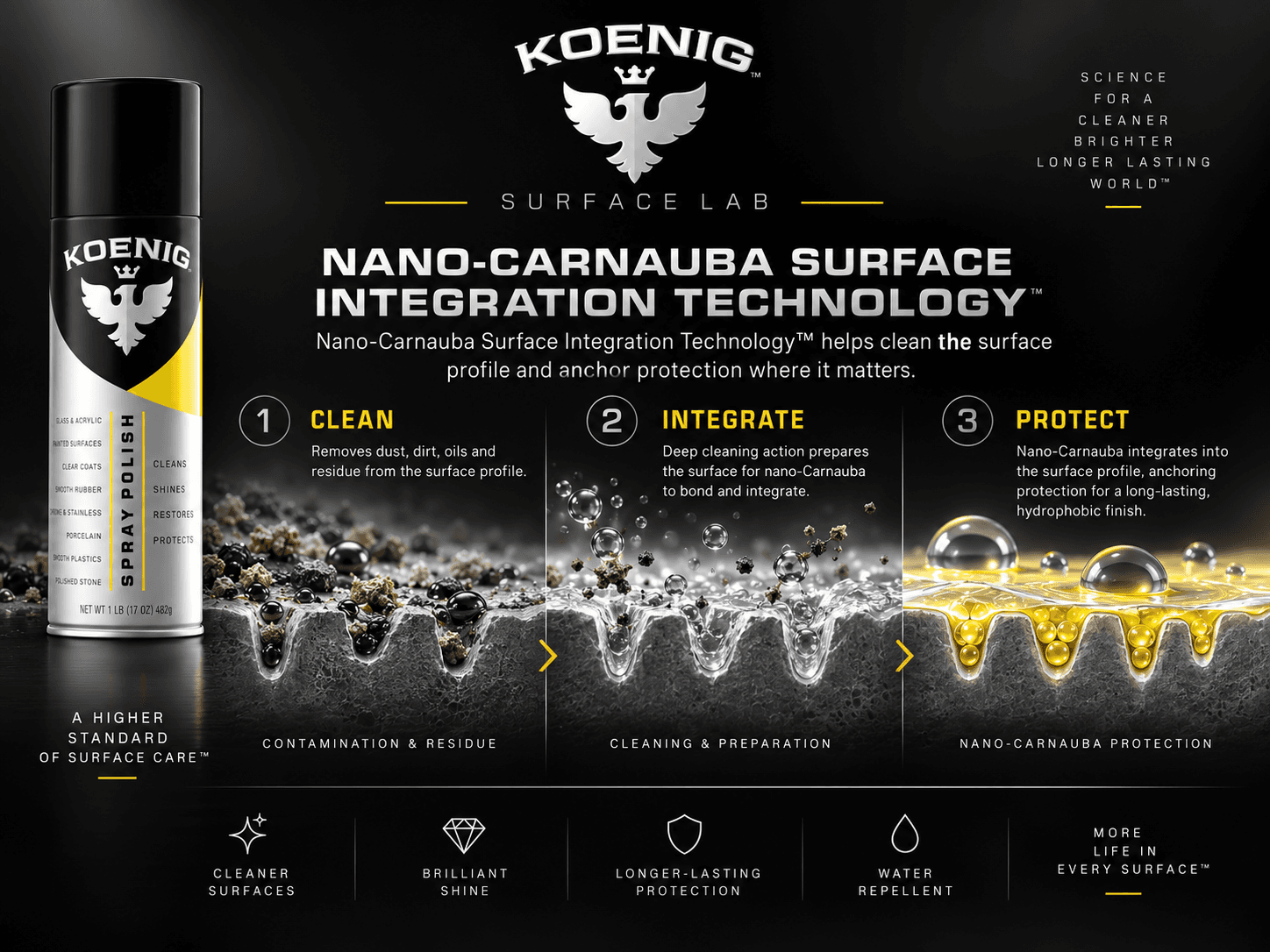
Use Koenig for compatible routine cleaning, polishing, and surface care.
Keep the application light and evaluate the actual material and finish rather than treating every countertop as interchangeable.
Routine residue
Remove ordinary film and residue before judging the underlying shine or finish condition.
Buffed appearance
Use a clean microfiber towel and inspect after residue is removed rather than while the surface is still wet.
Compatibility first
Manufacturer restrictions and a small test area take priority when the material, coating, sealer, or finish is uncertain.
Polished stone FAQ
Common questions about granite, quartz, and marble care.
Can granite, quartz, and marble all be treated exactly the same way?
No. They can share a cleaning-and-polishing workflow, but they are different materials and finishes. Follow manufacturer care restrictions and test a small inconspicuous area first.
Does polishing remove every stain or defect in stone?
No. Surface residue, dull film, etching, scratches, stains, worn finish, and sealer problems are different conditions and may require different correction methods.
Should I use more product if the surface looks streaky?
Not automatically. First buff with a clean towel and inspect for excess product or residue. A light, controlled application is easier to evaluate than a heavy coating.
Related problems and next steps